


CES offered a clear view into how advertising strategy is evolving. Not through product launches or bold claims, but through the same questions surfacing again and again across agencies, publishers, and platforms.
The conversations made it clear that what worked before is no longer enough. As brands continue to plan for this year, strategy needs to shift towards mindset, CTV, and culturally relevant moments like sports.
Below are five signals from CES that point to how advertising strategy will need to evolve in 2026.
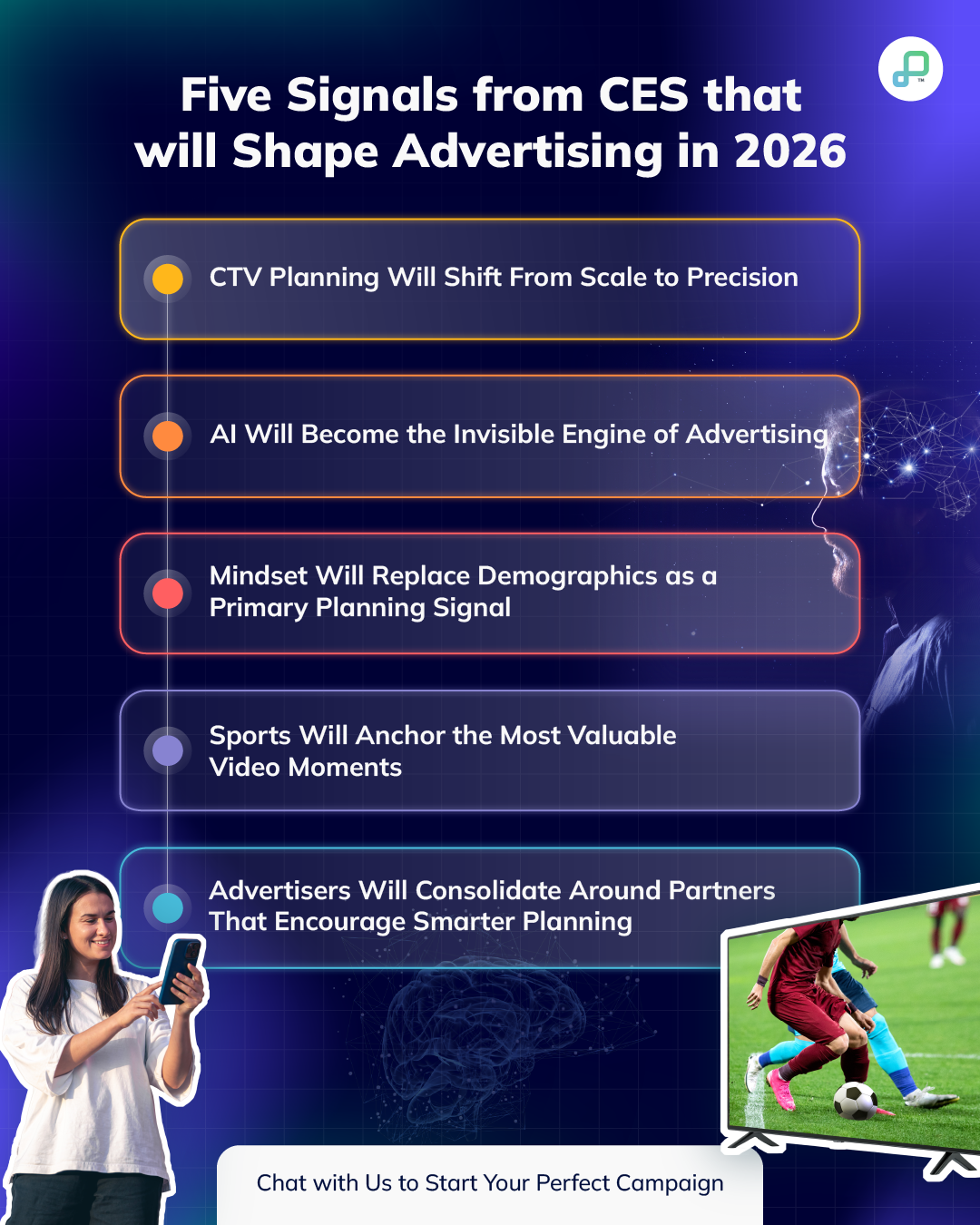
1. CTV Planning Will Shift From Scale to Precision
It is no longer up for debate that CTV will continue to be a powerful driver in video strategies.
At CES, we saw the same pain points surface at a rapid clip: overexposure, poor timing, and disconnected placements are starting to undermine performance. Advertisers are moving away from buying more impressions and toward designing CTV strategies around moments that feel deliberate and relevant.
That shift is reshaping what advertisers prioritize in CTV planning:
- Timing that aligns with how and why viewers are watching
- Frequency that feels intentional rather than repetitive
- Formats that fit the viewing experience instead of interrupting
This is where interest in viewer-initiated formats is accelerating. Pause ads, menu placements, overlays, and squeezebacks stood out because they allow brands to show up when viewers are already engaged, not when they are being pulled away from content.
Pause ads, in particular, surfaced as a clear signal of where CTV is headed. Not because the format is fully standardized yet, but because it reflects advertiser intent. Participating in the viewing experience without breaking it.
As these formats mature, CTV planning will continue to move from scale to precision, with timing, context, and intent driving performance.
2. AI Will Become the Invisible Engine of Advertising
AI is already everywhere, but pointed discussions at CES made it clear that enthusiasm is now paired with scrutiny.
The conversation has moved past experimentation and into execution, and with that shift came sharper questions. Teams are no longer asking what AI can unlock in theory. They are asking where it actually reduces friction, and where it creates new risk.
Planning workflows that rely on rigid handoffs are starting to feel fragile. Fully autonomous buying is still viewed with skepticism, especially when accountability and quality control are unclear. And while agentic systems are gaining attention, many organizations are slowing down to define guardrails before scaling.
What stood out was not blind optimism, but selective confidence. AI is being embraced where it can support faster planning, better signal alignment, and more consistent decision making. It is being resisted where it removes transparency or weakens human judgment.
Moving forward, the advantage will come from applying AI with intention. Not as a replacement for expertise, but as infrastructure that strengthens how advertising actually gets planned, activated, and evaluated.
3. Mindset Will Replace Demographics as a Primary Planning Signal
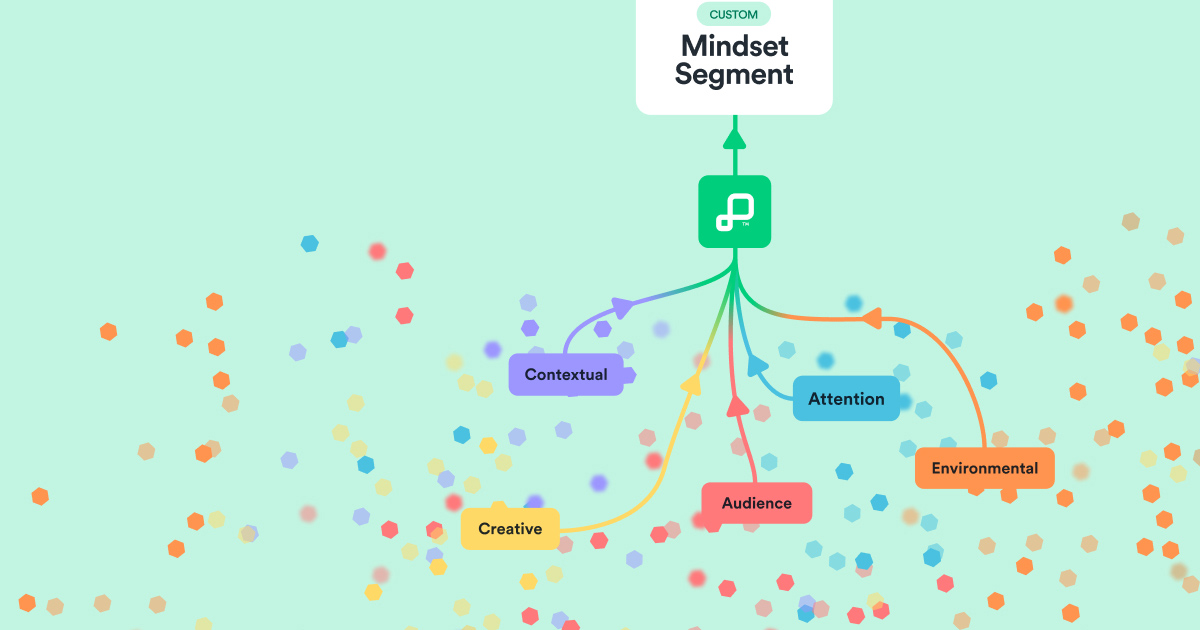
CES discussions reflected a continued migration away from static audience definitions, but also a shared frustration with how hard mindset still is to operationalize at scale.
Advertisers know emotional and situational context matters. What breaks down is turning that understanding into consistent planning inputs. Traditional workflows are still built around fixed segments, which makes it difficult to plan for what someone is watching, why they are watching, and how they are feeling in the moment.
This tension was especially clear in CTV conversations, where content and mindset are tightly connected but rarely planned together. Brands are trying to move beyond demographic assumptions, yet many lack the signals and structure to do it reliably.
That gap is where planning is headed next. Mindset will increasingly guide how advertisers decide when and where to show up, especially in environments where context and emotion are inseparable.
4. Sports Will Anchor the Most Valuable Video Moments
Sports are no longer something brands can haphazardly slot into their calendar. In 2026, gameday will be one of the most dependable environments for reaching audiences when emotion, attention, and intent align.
CES conversations made it clear that advertisers are already shifting how they think about sports. The focus is moving away from one off tentpoles and toward sustained presence across moments that fans actively care about.
What brands are planning for now looks different than it did even a year ago:
- Showing up across screens without overexposing the same fan
- Matching creative to the emotional energy of the moment, not just the event
- Measuring impact in ways that go beyond reach and impressions
Sports will evolve from a seasonal tactic into a strategic anchor for video planning and will be one of the clearest ways for brands to connect with audience mindset at scale.
5. Advertisers Will Consolidate Around Partners That Encourage Smarter Planning
The advertising ecosystem is not getting broader in 2026. It is becoming more selective.
Pressure on the open web, continued platform dominance, and growing operational complexity are forcing agencies and advertisers to make sharper decisions about who they work with and how much they rely on them. CES surfaced a clear shift toward consolidation driven by the need for clarity and focus.
Rather than stitching together fragmented point solutions, brands are gravitating toward partners that can support planning, activation, and measurement in a more connected way.
Partnerships will be judged less by how many boxes they check and more by how effectively they help advertisers simplify strategy and drive meaningful outcomes.
It’s Time to Act on How Audiences Will Engage
In 2026, brands will win by planning for mindset, not just media. By showing up in moments that matter across CTV and sports, not chasing reach for its own sake.
GumGum enables that shift. We help brands activate omnichannel with intention, connect with audiences when receptivity is highest, and turn cultural moments into meaningful results.
{{cta-1}}