


We promise this isn’t another planning guide cluttering up your inbox.
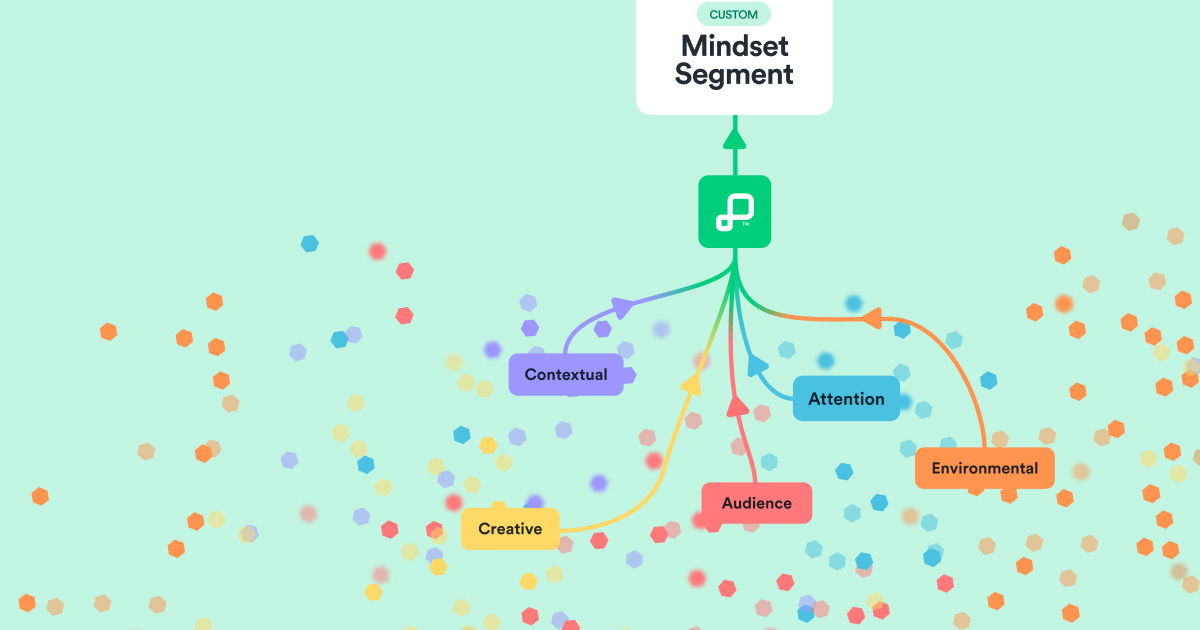
Now that that’s out of the way, your 2027 campaigns deserve a better launch point than a static audience profile and a familiar targeting playbook. They should start with a clearer understanding of what people are doing, thinking, feeling, and open to in the moments your message can reach them. That state of mind in the moment, and what someone is open to right then, is what we mean by Mindset.
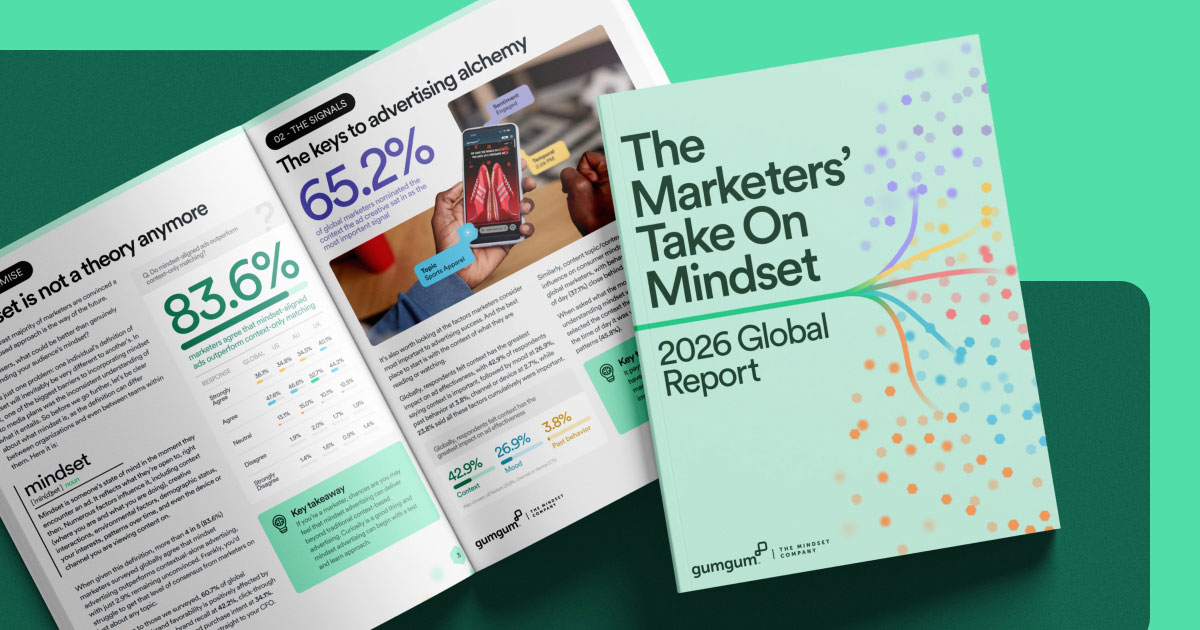
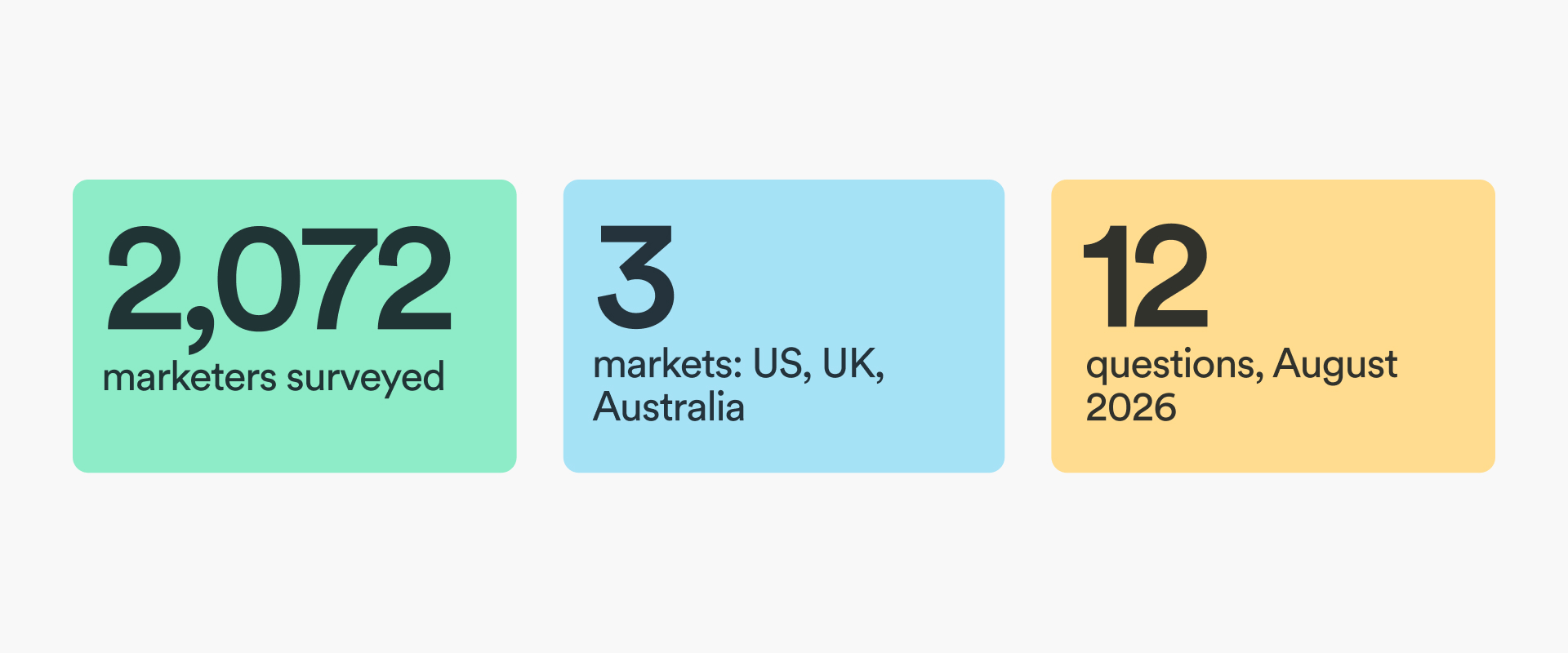
That need for a Mindset approach in every campaign is exactly why we put together The Marketers’ Take on Mindset: 2026 Global Report. GumGum surveyed 2,072 marketers across the US, UK, and Australia to understand how Mindset is showing up in planning today, where teams are getting stuck, and what needs to change next.
We’ll start with a few of the findings that matter most for your 2027 planning. The full report goes deeper into the data, the barriers marketers are facing, and where to go from here.
Mindsets Shift. Media Plans Should Too.
People don’t move through the day in one fixed state. What they’re reading, watching, thinking about, and open to can change from one moment to the next. Your media plan has to leave room for that movement.
The research suggests that’s easier said than done. In GumGum’s 2026 survey, 80.9% of marketers said their brand incorporates Mindset effectively, but only 35.5% said they factor it into planning. Even among marketers who consider Mindset part of every campaign, many still fall back on familiar identity-based approaches when it’s time to activate.
Laura Foster, SVP of Global Marketing at GumGum, sees that gap show up when audience strategy meets the media plan: “You can spend six to 12 months archetyping this perfect audience... and then it comes down to the media planning, and you’re asking, ‘Where does this audience live online?’ And that’s where it falls apart.”
That’s where even a carefully built audience strategy can start to lose some of its shape. You can spend months defining who your audience is, what they care about, and what motivates them, then force all of that thinking into a media plan that assumes they’ll show up the same way every time.
They won’t.
For your 2027 planning, the takeaway is simple: be malleable. Give your strategy room to respond to the moments, signals, and shifts that can change whether someone is receptive to your message in the first place.
{{cta-1}}
The Right Audience Can Still Give You the Wrong Results
For years, targeting has been built around one big question: who is the right person?
The research suggests that may be only half the job.
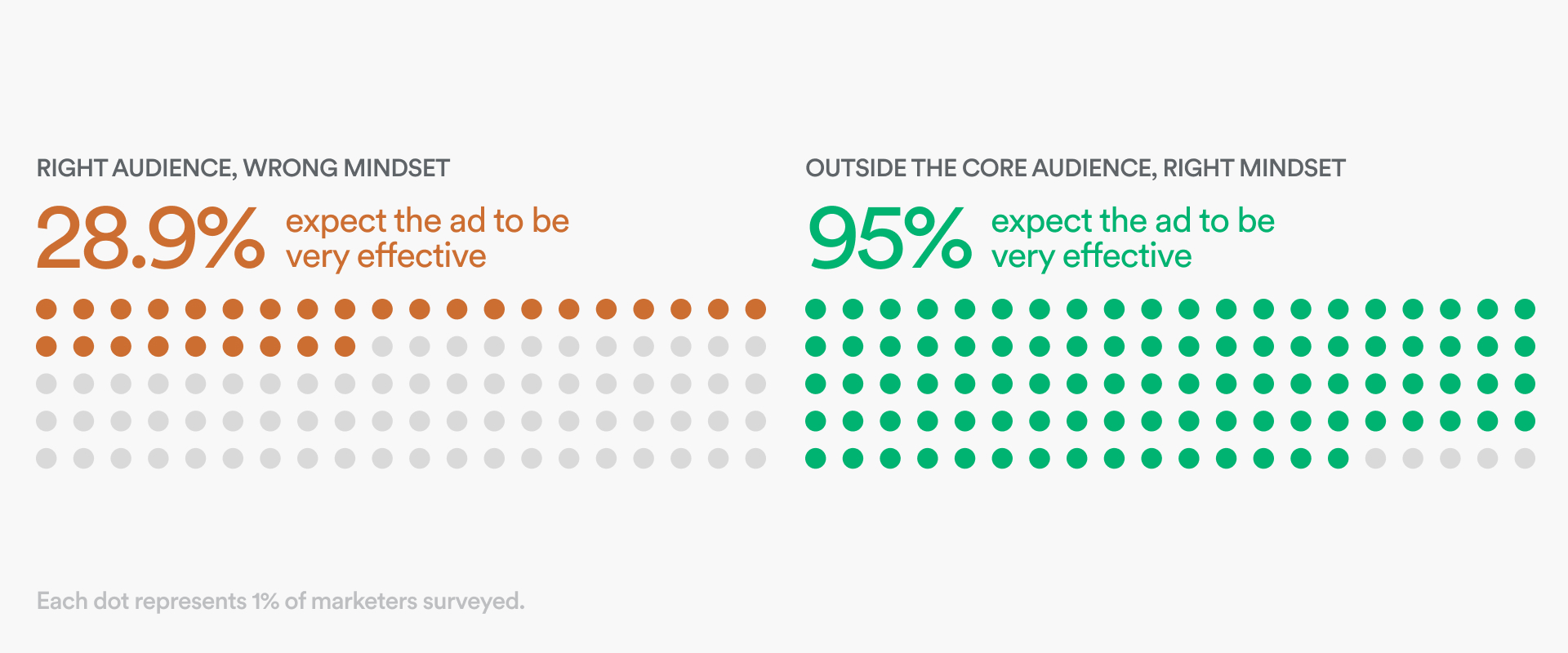
The survey showed that only 28.9% of marketers said an ad reaching the right audience in the wrong mindset would be very effective, while 95% said someone outside a brand’s core target audience is still at least somewhat likely to engage when the mindset is right.
That should matter when you’re rethinking your 2027 strategy.
Your core audience still matters. So do demographics, interests, and all the work that goes into understanding who you want to reach. But those inputs shouldn’t become walls around the campaign. Receptivity can show up outside the audience you expected, and the people most ready to engage may not always fit neatly inside the profile you drew at the start.
“The perfect audience that you architect might not live in the real world, and they might not actually buy. There might be another audience that’s more willing to engage, to consume, to get out and buy something.”
— Laura Foster, SVP of Global Marketing at GumGum
A stronger media plan leaves room to find those moments instead of ruling them out before the campaign even has a chance to learn.
Context Matters. It Just Isn’t the Whole Picture.
Context is one of the clearest signals marketers use to understand whether an ad fits the moment.
In the survey, 42.9% of marketers said the content surrounding an ad has the greatest impact on effectiveness, and 65.2% named context as the most important signal for understanding someone’s mindset.
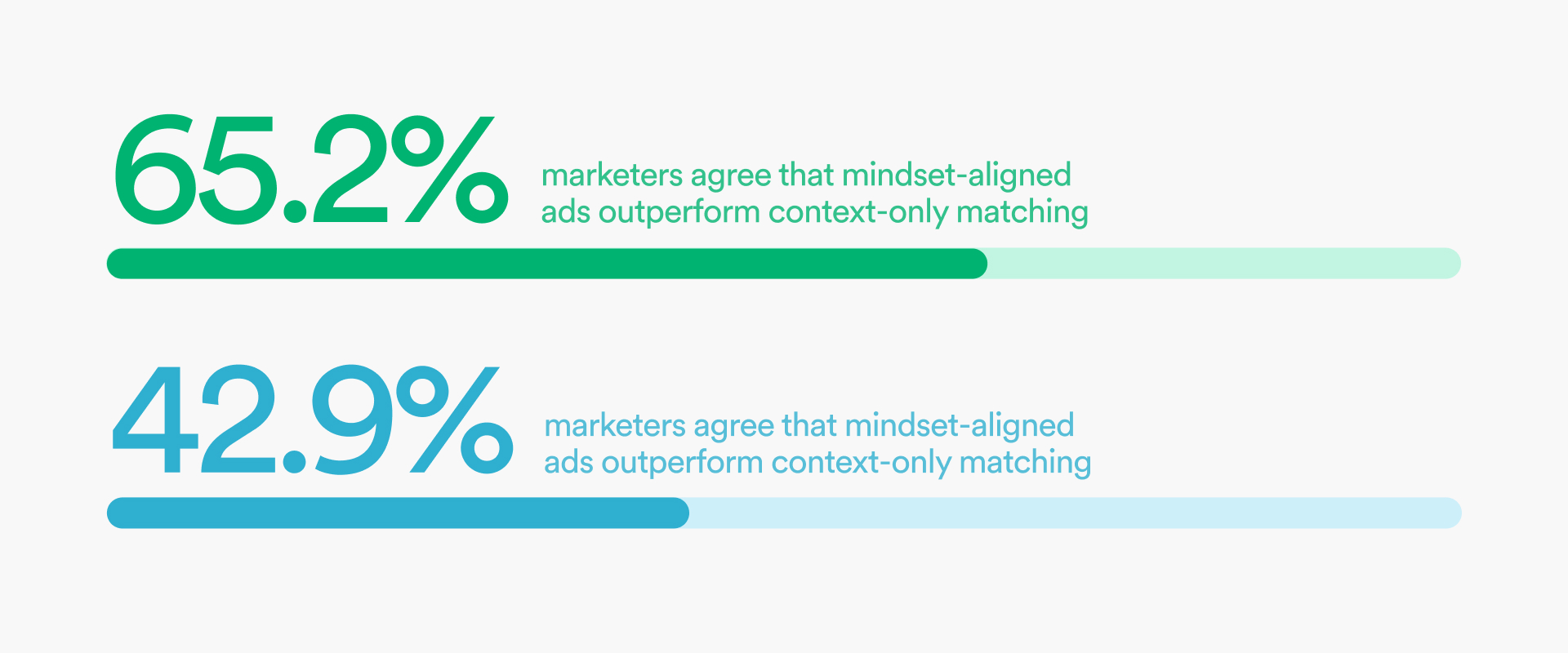
That makes sense. What someone is reading or watching tells you a lot about what has their attention in that moment.
But context alone can’t define a person.
Mindset also accounts for the other signals shaping receptivity, from time of day and behavior to creative, environment, interests, and the device or channel someone is using. As Laura puts it, “What someone reads or watches matters, but age and gender matter too. It’s not one signal that’s important. Everything is weighted.
Context can tell you what someone is engaging with. The real advantage comes from understanding what that moment means for the campaign.
Build More Room for Mindset in 2027
The point isn’t to rebuild your entire media strategy from scratch. Start with one campaign, one brief, and a better read on the signals shaping receptivity. From there, you can begin making Mindset a more intentional part of how you plan, activate, and learn.
The Mindset Portal gives you a direct way to put that thinking into practice, from exploring audience and seasonal insights to building custom Mindset Segments and evaluating creative. It’s where you can see the thinking behind Mindset and start using it in your own campaign planning.
For the full research, regional findings, and a deeper look at what’s holding marketers back and where to go next, download The Marketers’ Take on Mindset: 2026 Global Report.
{{cta-2}}