











Advertising
Who you reach matters. When you reach them matters more.
The Mindset Graph™ ensures you show up when the moment is right.
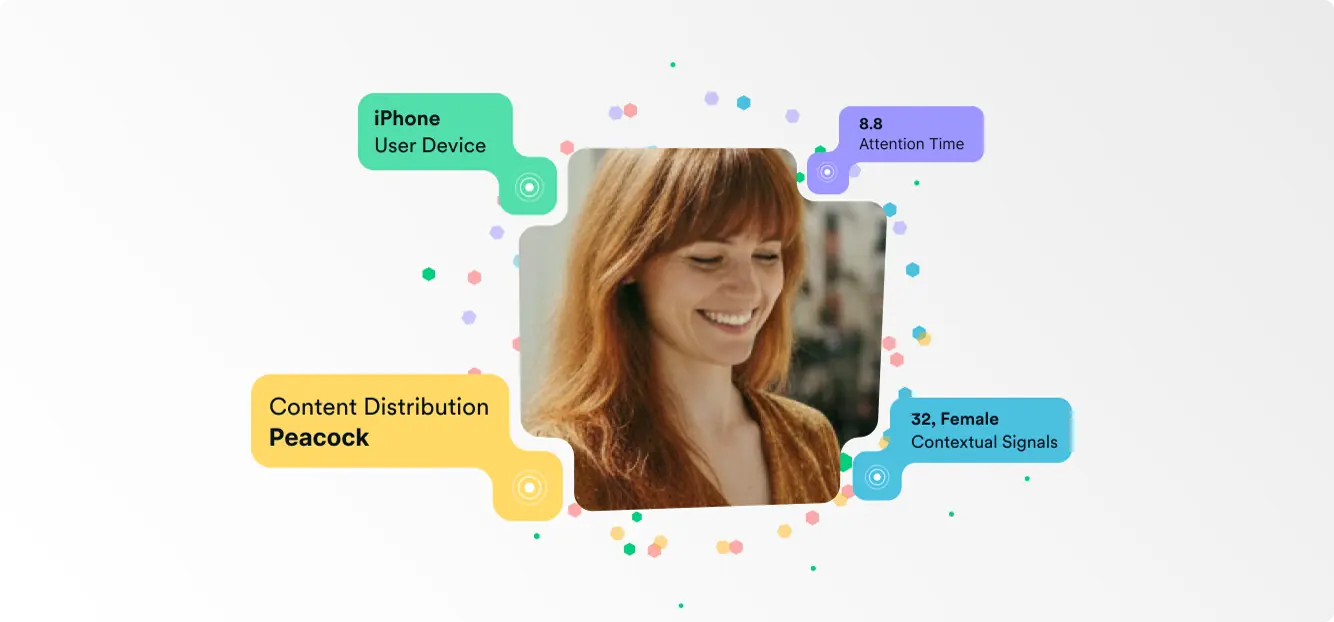


Signals can tell you something about a person, but they can’t tell you if the moment is right. Mindset closes that gap, revealing when someone is receptive and what will resonate. It’s a real-time read of readiness.
Every moment presents a different opportunity. Real-time signal combinations determine, when to act, when to hold and how to engage.





.webp)






Every impression is evaluated in real time, with signals working in harmony to determine what matters and how to act.
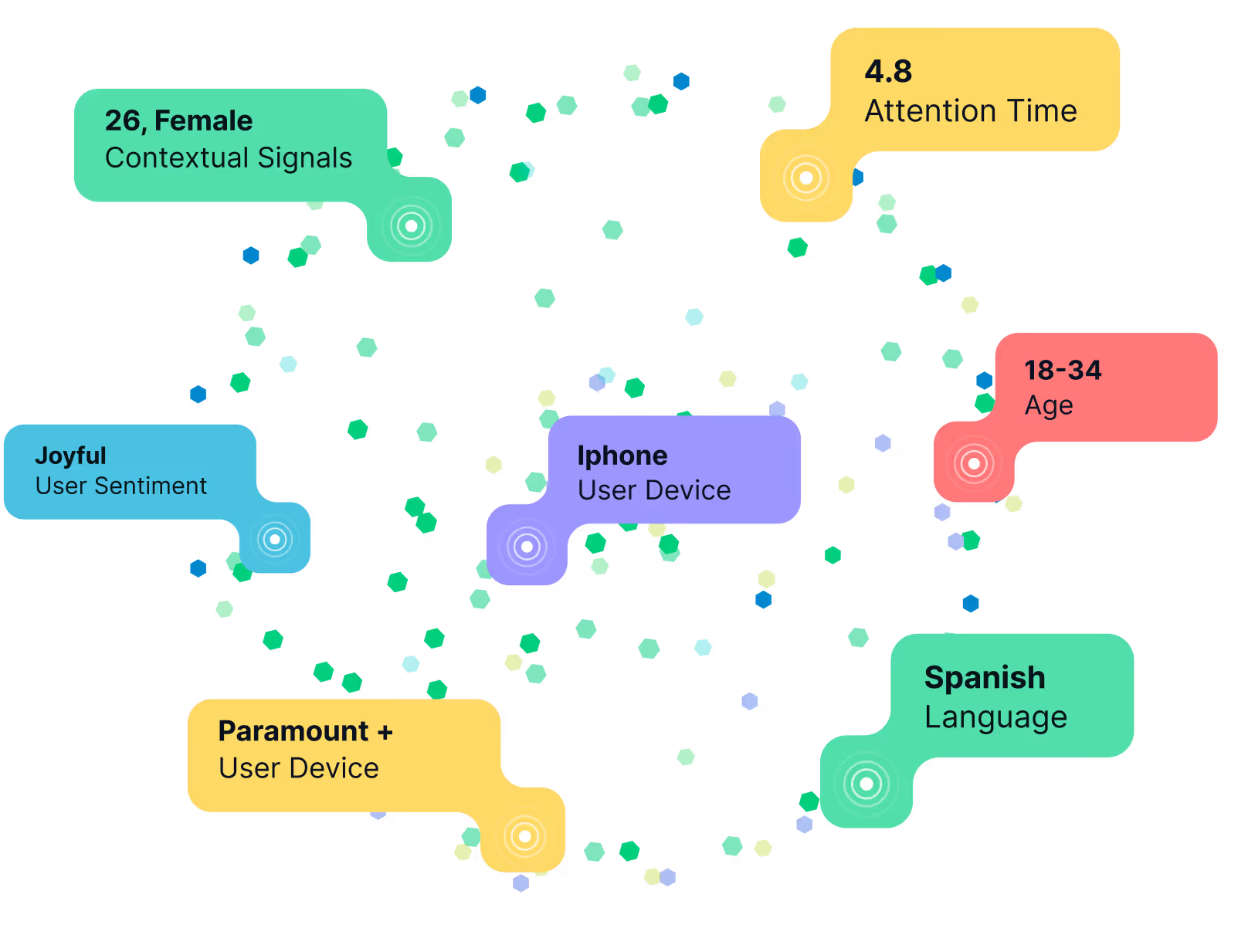
Real-time signals are continuously captured. The more complete the input, the more accurate the read.
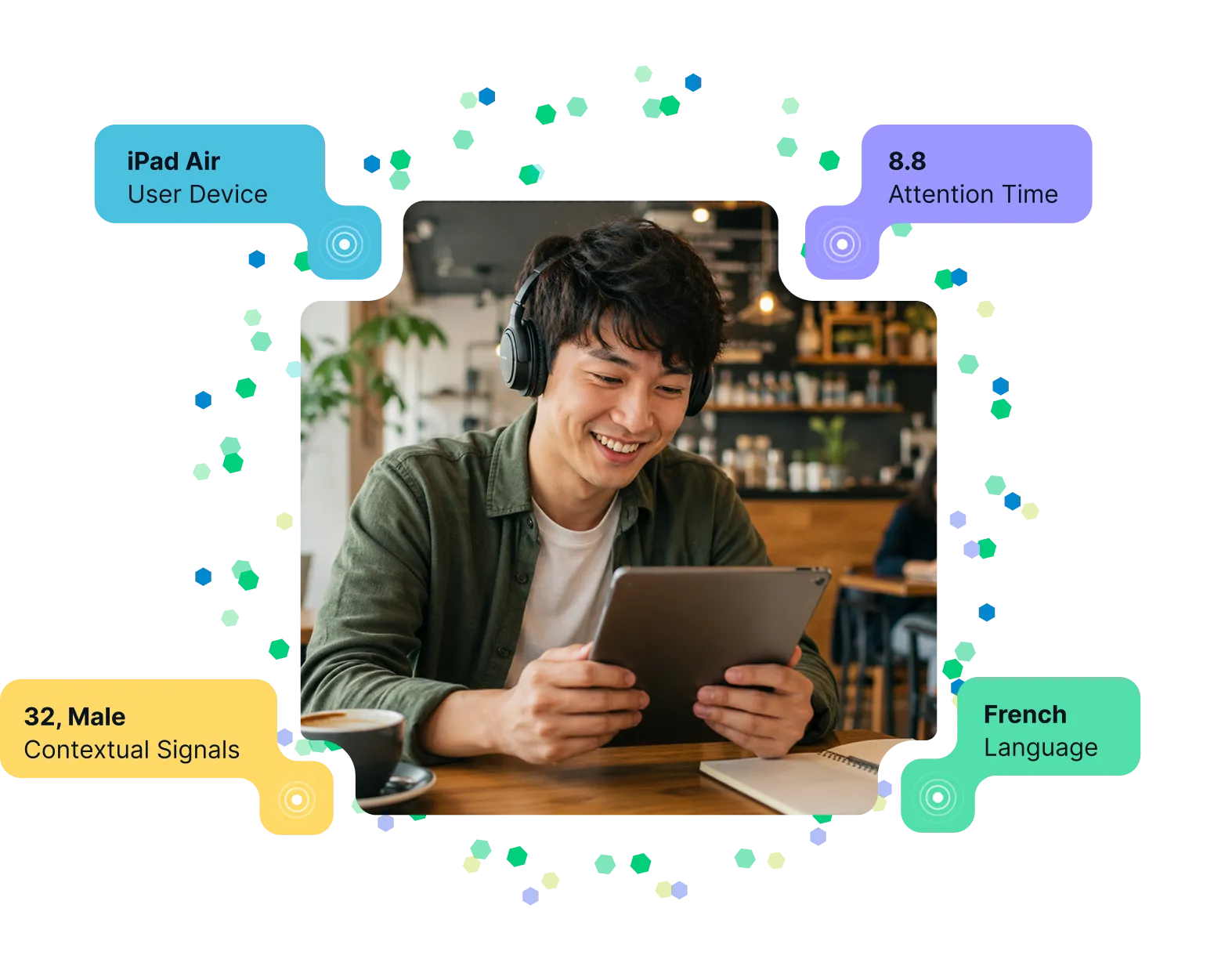
Signals only make sense when they’re evaluated as a whole, revealing what’s really happening in the moment.

Determines activation, format, and impression weight in real time, for every available impression.

Outcome data feeds back into the Mindset Graph™, refining the model with every impression served. The longer it runs, the sharper it gets.
The Mindset Portal gives you direct access to the Mindset Graph™, making it easy to explore, understand, and act on what’s happening in the moment.
.avif)
The Portal shows where receptivity is building across the environments that matter to your category, where your audience is most engaged, and where others aren’t showing up yet, in real time and tailored to your brief.
Chat lets you ask a question and move straight to a plan, grounded in how your audience is thinking, where receptivity is building, and what to do next.
Mindset shapes the decisions that define a campaign, from where to show up to how to engage.
.avif)
.avif)
.avif)
.avif)
Hear from your peers on what changes when plans run on Mindset. Partners value the clarity and edge of a mindset-first approach.
Coverage of GumGum, the Mindset Graph™, and what receptivity-first advertising means for the market.
Explore how Mindset powers omnichannel execution, and how it performs when results are independently measured.

Share your objectives and a member of our team will walk you through what the Mindset Graph sees in your category, your competitive landscape, and the moments worth owning. Tell us about your goals, and we’ll show you where Mindset can make the biggest impact.




Contextual intelligence refers to the ability to read, interpret, and act on the signals present in an advertising environment, including the content of a page, the category of a publisher, and the sentiment of an editorial moment. It goes beyond simple keyword matching by understanding the semantic and emotional character of the context in real time.
The depth of contextual intelligence varies significantly across platforms. At its most basic, it classifies content into broad categories. At its most advanced, it reads sentiment, topical relevance, and environmental quality to identify moments that are both brand-suitable and strategically valuable.
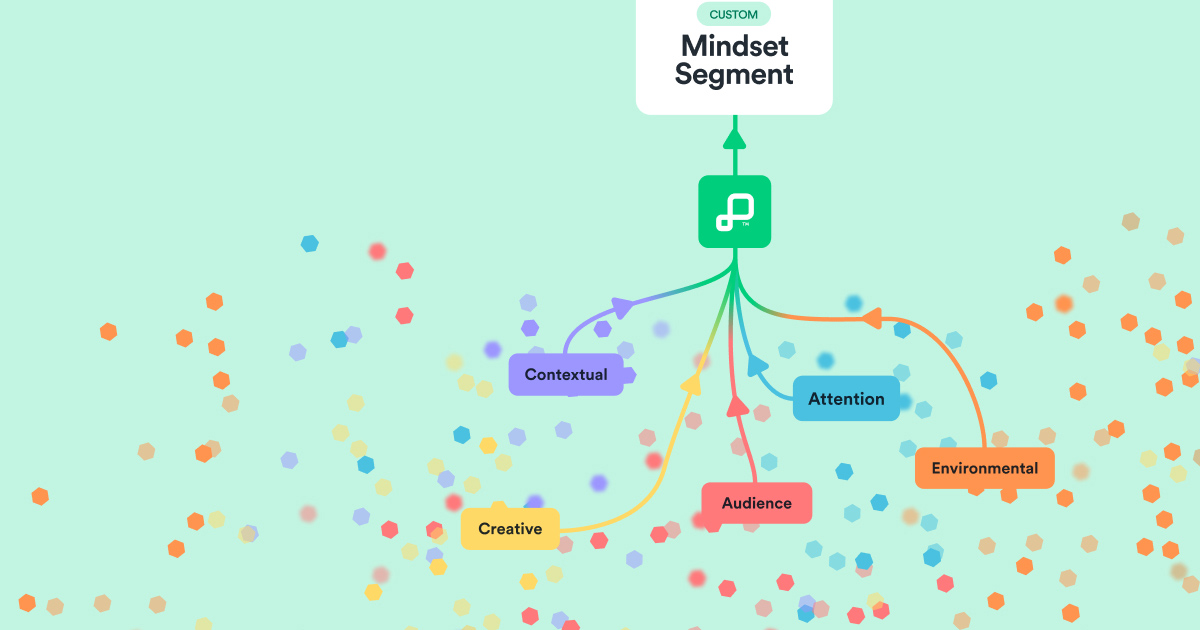
The Mindset Graph generates contextual intelligence as one layer of a broader receptivity read. Contextual signals are powerful inputs, but they are combined with attention, device environment, time of day, and campaign performance data to create a more complete picture of whether a moment is worth activating. Contextual intelligence is where Mindset begins, not where it ends.
Contextual advertising places ads based on the content of the page or environment where they appear. Instead of following a user across the web using behavioral data, it focuses on the context of the moment, such as the topic of an article, the category of a video, or the editorial environment of a publisher.
The limitation is precision. Knowing that someone is reading about running shoes tells you something about their interest, but it says far less about whether they are in a state to absorb and respond to an ad at that moment. Two people reading the same article can be in very different mental states. One may be engaged, while the other is distracted, and context alone cannot tell the difference.
Mindset builds on contextual signals rather than replacing them. The Mindset Graph reads context alongside attention, environment, device, time, and dozens of other real-time inputs to create a complete picture of receptivity. The result is not just placement in a relevant context, but activation in a moment when someone is genuinely open.
Contextual targeting matches ads to the content of the environment. Audience targeting matches ads to people based on who they are, including their demographics, behaviors, purchase history, or interests. Both approaches are useful, but neither is complete on its own.
Contextual targeting can tell you that someone is in a relevant environment, but it cannot tell you if they are in a receptive state. Audience targeting can tell you that someone fits a profile, but it cannot tell you if the moment is right. Even a high-value audience member reached at the wrong time is still a wasted impression.
Mindset is what both approaches have been missing. It provides a real-time read of whether a person, in a specific environment, at a specific moment, is open to your message. It does not replace contextual or audience targeting. It is the layer that determines whether either approach will actually work.
Attention advertising is an approach to digital media that uses attention metrics, typically measured by time-in-view, eye-tracking proxies, or active engagement signals, to evaluate ad quality beyond standard viewability. The idea is simple: an ad being viewable does not guarantee that it was actually seen or processed.
Attention is a meaningful step forward from viewability, but it still has limits. It measures behavior after the fact, showing whether someone looked, but not the underlying state that determines whether that attention leads to impact. Two people can spend the same amount of time on an ad while being in very different mental states. One may be genuinely engaged, while the other is simply present but unreceptive.
Mindset is the precondition that determines whether attention has value. The Mindset Graph reads attention signals alongside context, environment, and timing to assess receptivity, which is the state in which attention translates into real impact. Optimizing for attention without accounting for Mindset means capturing eyes without truly capturing minds.
Brand suitability describes the alignment between an ad placement and a brand’s standards, values, and audience expectations. It goes beyond brand safety, which focuses on avoiding harmful content, and looks at whether an environment is genuinely right for a brand, even if it is technically safe
For example, a financial services brand might avoid contexts that suggest risk or volatility, even if the content itself is safe. A family brand may apply stricter filters than standard content classifications. Brand suitability frameworks allow for this level of nuance by defining what is appropriate for a specific brand, not just what is considered harmful overall.
Mindset takes brand suitability a step further. Ensuring an ad appears in a suitable context answers whether the environment is appropriate. Mindset answers whether the audience is receptive in that moment. A placement can be perfectly suitable and still underperform if the audience is not open. The strongest campaigns get both right by aligning the right environment with the right moment of receptivity.