








Mindset
Your audience isn't on one screen. Their mindset doesn't wait for one format. CTV, OLV and Display, built to reach them when they're ready.

.avif)
.avif)
.avif)
.avif)

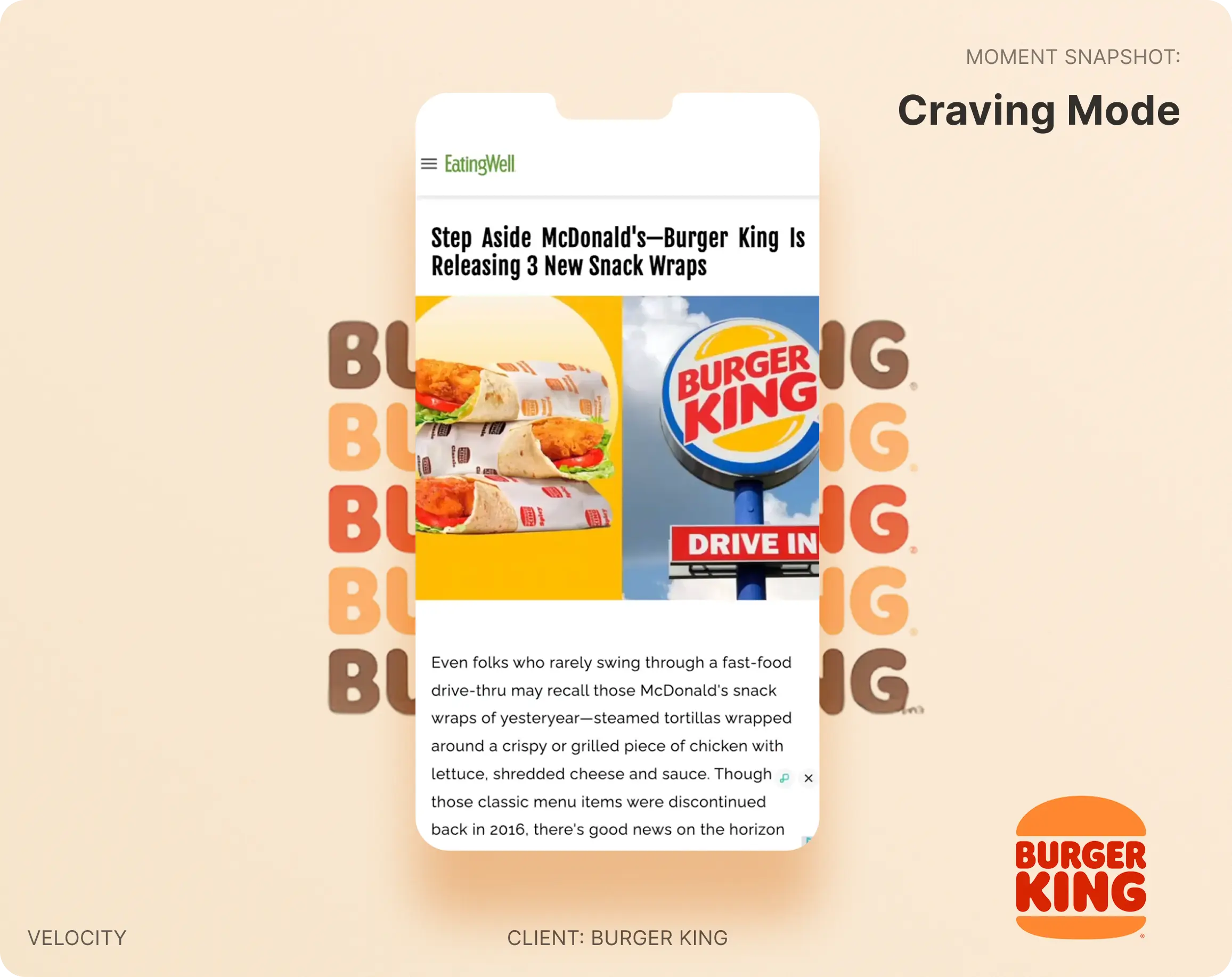
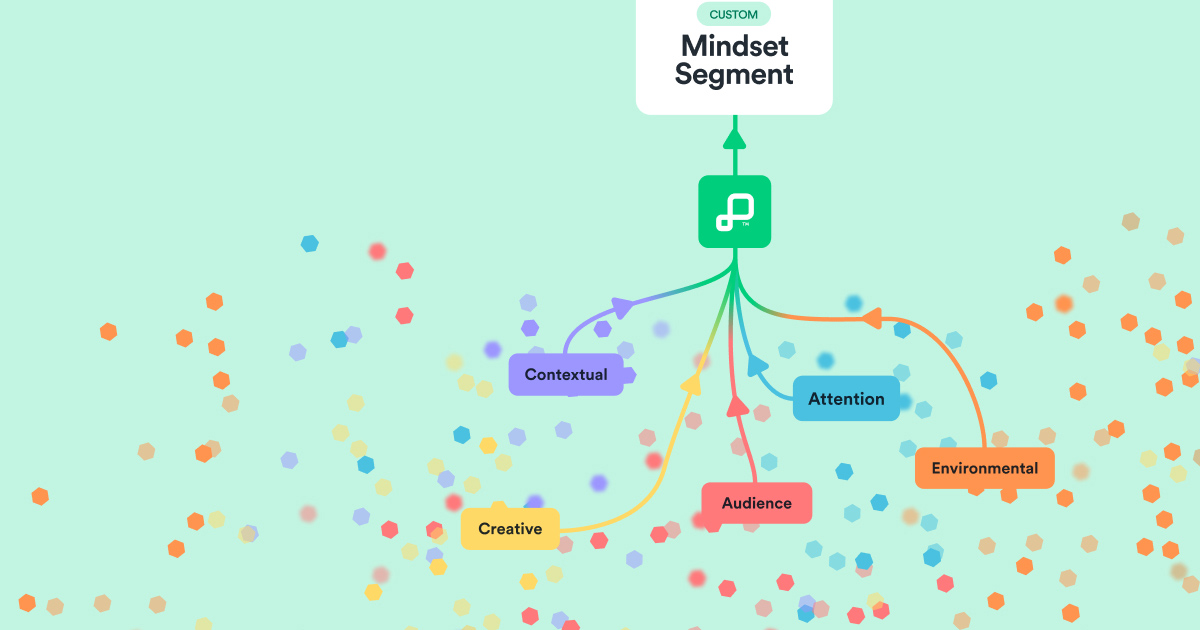
The Mindset Graph™ runs the full campaign. The same system that finds the right moment shapes every stage that follows.
Millions of real-time signals, continuously assessed and combined, to identify when your audience is most open to your message. Not just who they are, but when they're ready.
.avif)
40,000 MFA-free publisher partners across 19 markets. Premium, direct inventory across the open web and CTV. Reach at scale, without the trade-offs.
.avif)
Expertly tailored creative across CTV, online video, and High Impact, then refined in-flight as attention changes.
.avif)
Brand lift, attention, viewability, and business outcomes, all measured by third parties. Use whoever you trust. The results are built to hold up.
.avif)
40,000 MFA-free publisher partners across 19 markets. Trusted by all major agency holding companies and independents alike, as well as 77% of Interbrand's best global brands. Reach at scale has never had to mean reach at risk.
Packages built around brand awareness, performance, and full-funnel goals, giving teams a clear way in without a custom build.
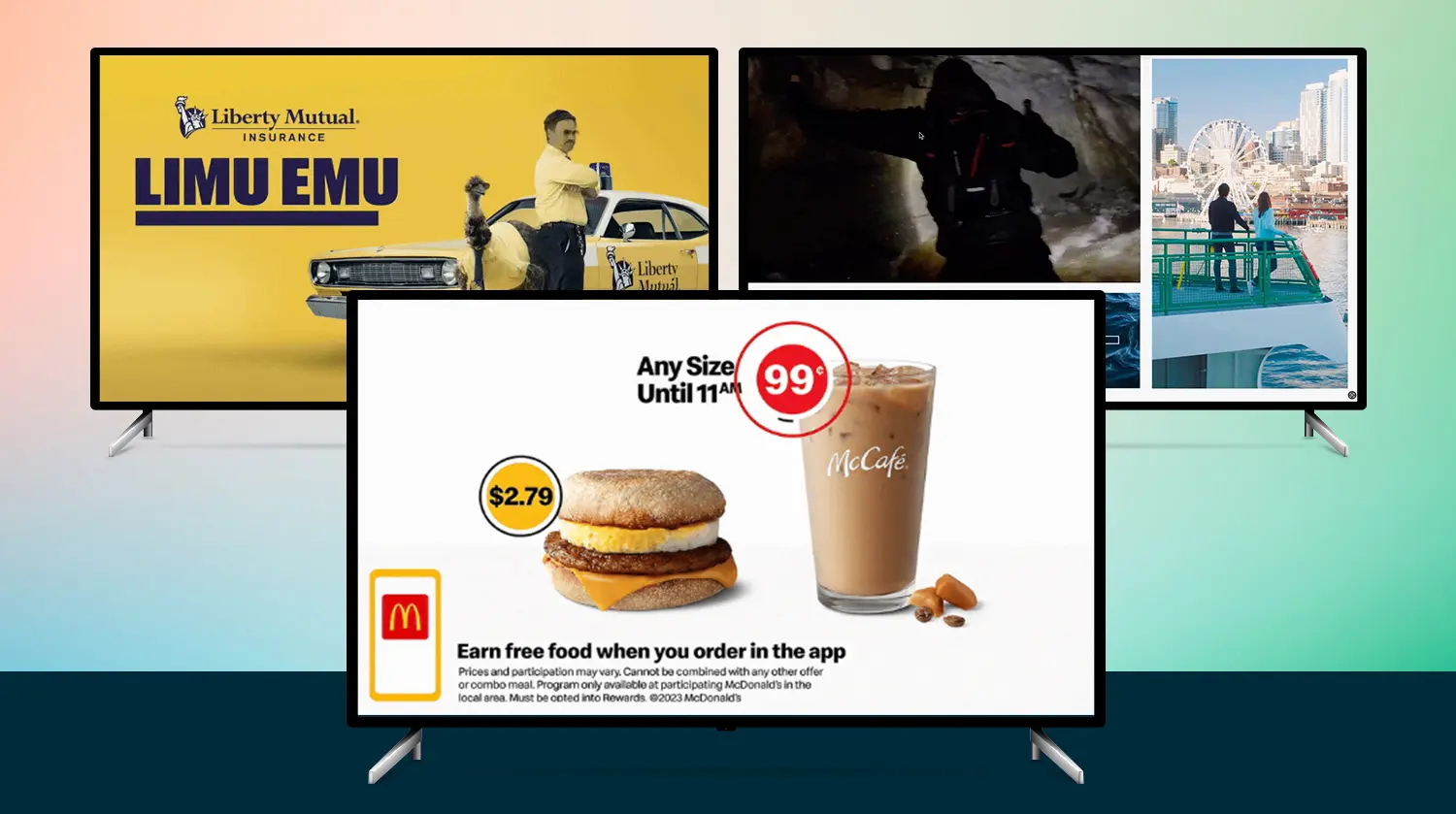
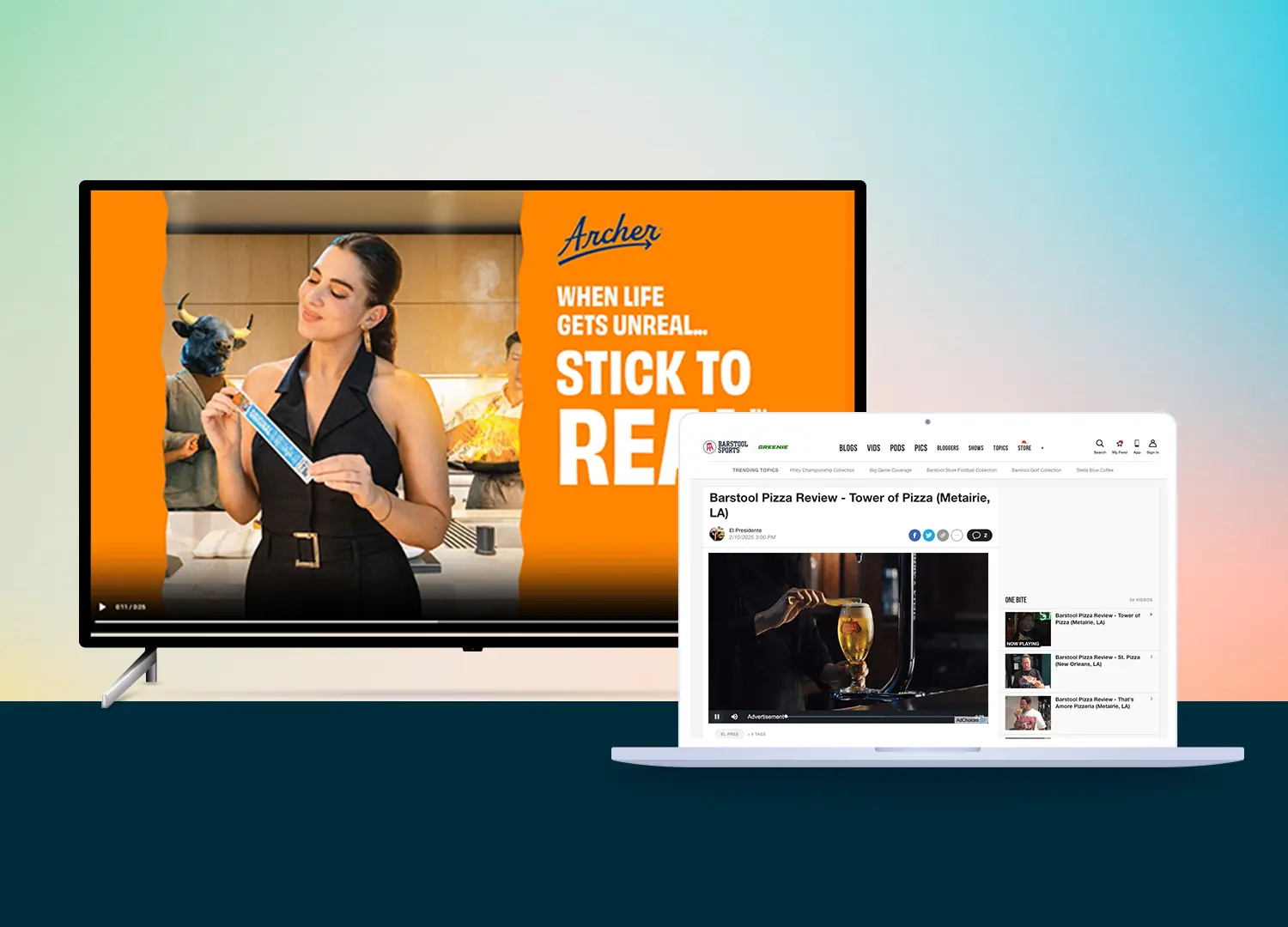
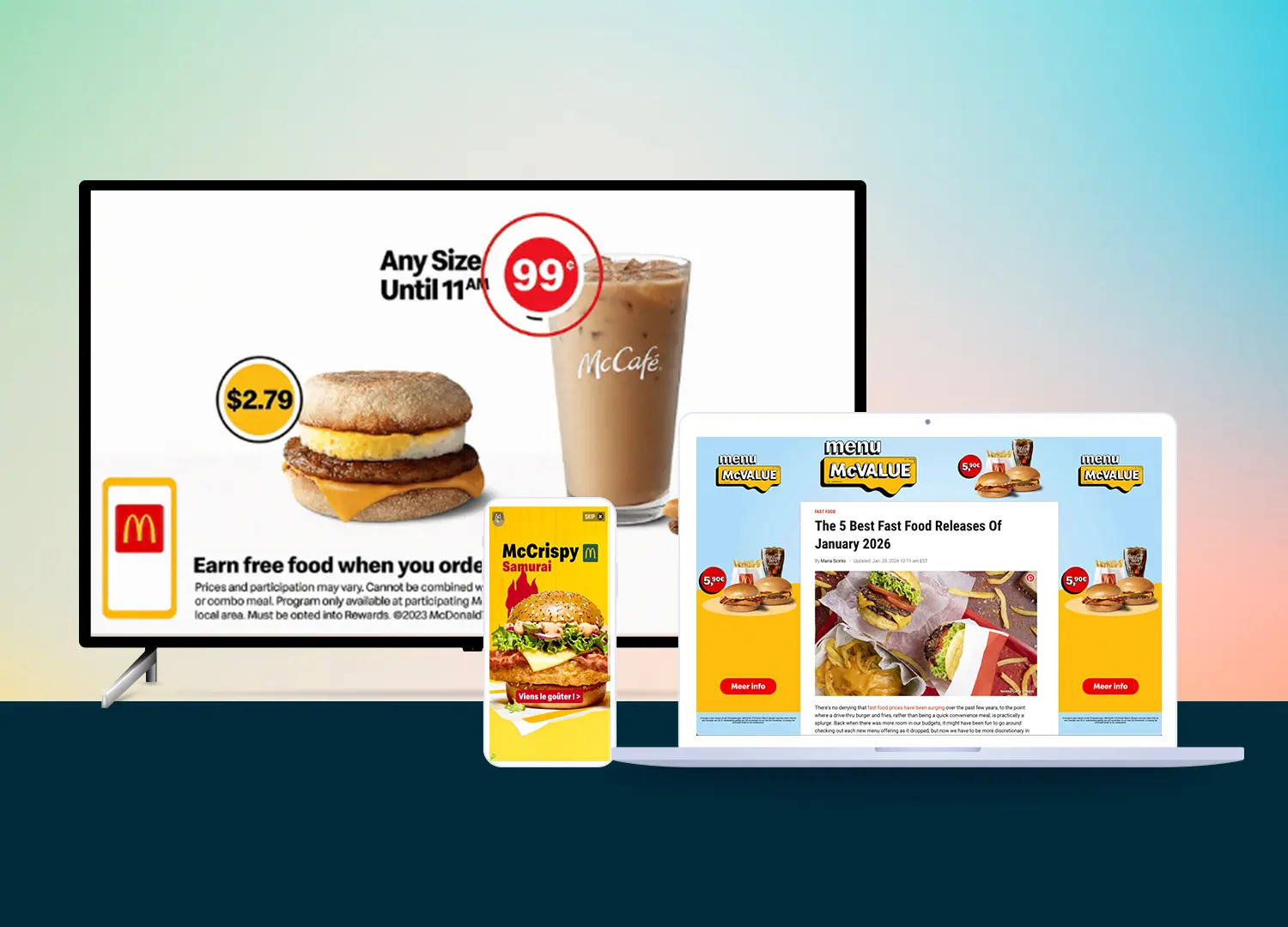

Explore Mindset to understand the intelligence, or Results to see what it delivers in market.
Tell us your objectives and channels of interest. We'll put together an omnichannel strategy built around your mindset moments. No generic proposal. Just what's relevant to your campaign.




CTV (Connected TV) refers to video ads served within streaming content on a television screen, through smart TVs, Roku, Fire TV, Apple TV, and similar devices. The viewer is typically in a lean-back environment and fully focused on the content. Ad formats are usually non-skippable, and completion rates tend to be high.
OLV (Online Video) covers video advertising served across desktop, mobile, and the open web, including publisher video players, news sites, sports platforms, and premium editorial environments outside of YouTube and social platforms.
The real difference is not format or screen size. It comes down to receptivity. A viewer settled in to watch a streaming series is in a very different mindset from someone scrolling through a browser. Treating both channels as interchangeable simply because they deliver video is where media plans lose efficiency. Strong campaigns account for that difference in audience state and plan creative, sequencing, and measurement with it in mind.
YouTube accounts for a large share of OLV spend, but only a portion of total online video consumption happens there. Premium publishers, news sites, sports streaming platforms, and editorial video players collectively reach audiences that YouTube does not.
The overlap between YouTube audiences and open web OLV audiences is consistently low. In some campaigns, it can be under 1%. This means open web OLV is not just extending a YouTube buy, it is reaching a genuinely different audience.
For brands focused on incremental reach or brand safety, premium open web OLV should be treated as its own channel. Accessing it effectively requires strong supply-side relationships and the ability to identify high-receptivity moments within that inventory, not just broad reach.
OTT (Over-The-Top) refers to any streaming video content delivered over the internet, bypassing traditional cable or broadcast. It can be viewed on a range of devices, including phones, tablets, laptops, and televisions.
CTV (Connected TV) is a subset of OTT. It specifically refers to streaming content watched on a television screen through a connected device or smart TV.
Every CTV impression is OTT, but not every OTT impression is CTV.
This distinction matters when planning campaigns because screen and environment shape audience mindset. The same piece of content watched on a mobile device versus a TV reaches someone in a different state of attention and receptivity. Aggregating OTT reach without separating by device removes a layer of nuance that directly affects performance. For brand campaigns where impact per impression matters, that nuance is important to keep.
Standard display units, including banners, rectangles, and most IAB formats, exist in an environment shaped by habituation. They appear in cluttered page layouts where most viewers have learned to ignore them.
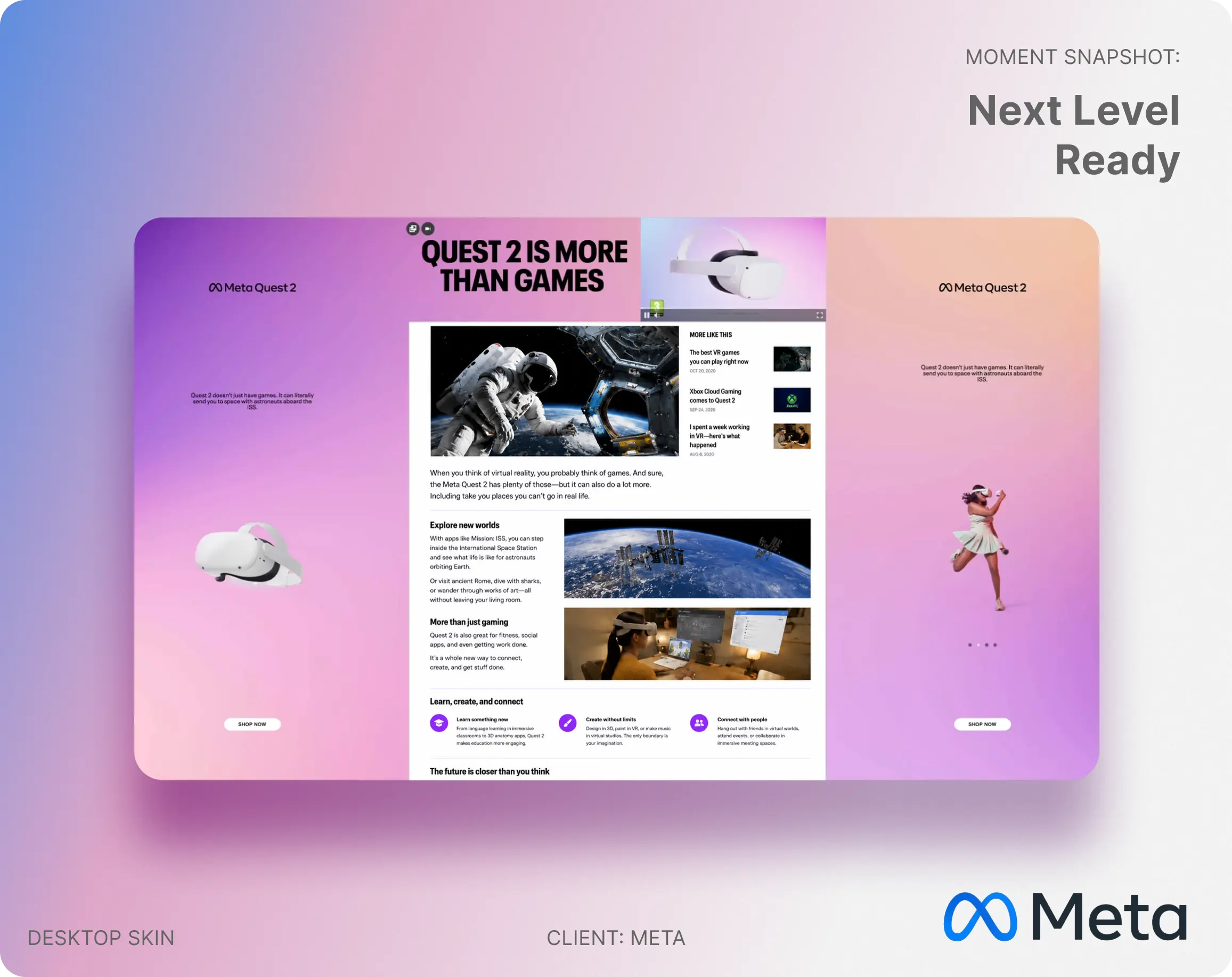
High impact formats behave differently. Formats such as interscrollers, large format skins, and page takeovers do not compete for peripheral attention. They take over the visual field at a moment when the viewer is actively engaged with content. The result is an impression that is hard to miss because the format creates the conditions for it to land.
In practice, this creates a genuine pause moment. It is not just an ad being served, but an ad being received. For brand awareness, launches, or any campaign where recall matters, the difference between a standard impression and a high impact impression is not just visual. It comes down to whether the audience was actually receptive when the ad appeared. High impact formats are designed to make that more likely.
Running an omnichannel campaign means coordinating creative, targeting, and delivery across CTV, OLV, and high impact display within a single strategy. It is not about running three separate channel buys with no shared logic.
In practice, this requires a consistent audience approach across channels, creative that is adapted to each format and environment, frequency management to avoid overexposure, and a unified view of delivery.
Measurement is where many omnichannel campaigns fall apart. Each channel produces its own metrics, such as completion rate for video or attention for display, and these do not easily translate across environments. The result is reporting that looks complete but cannot clearly show whether the campaign was effective.
A strong measurement framework should answer three questions. Who was reached, and how much overlap existed between channels? Did the campaign shift brand metrics such as awareness, recall, or consideration? And did those changes connect to real business outcomes? Each of these should be validated independently. Self-reported attribution across owned channels is not true measurement, it is closer to accounting.